



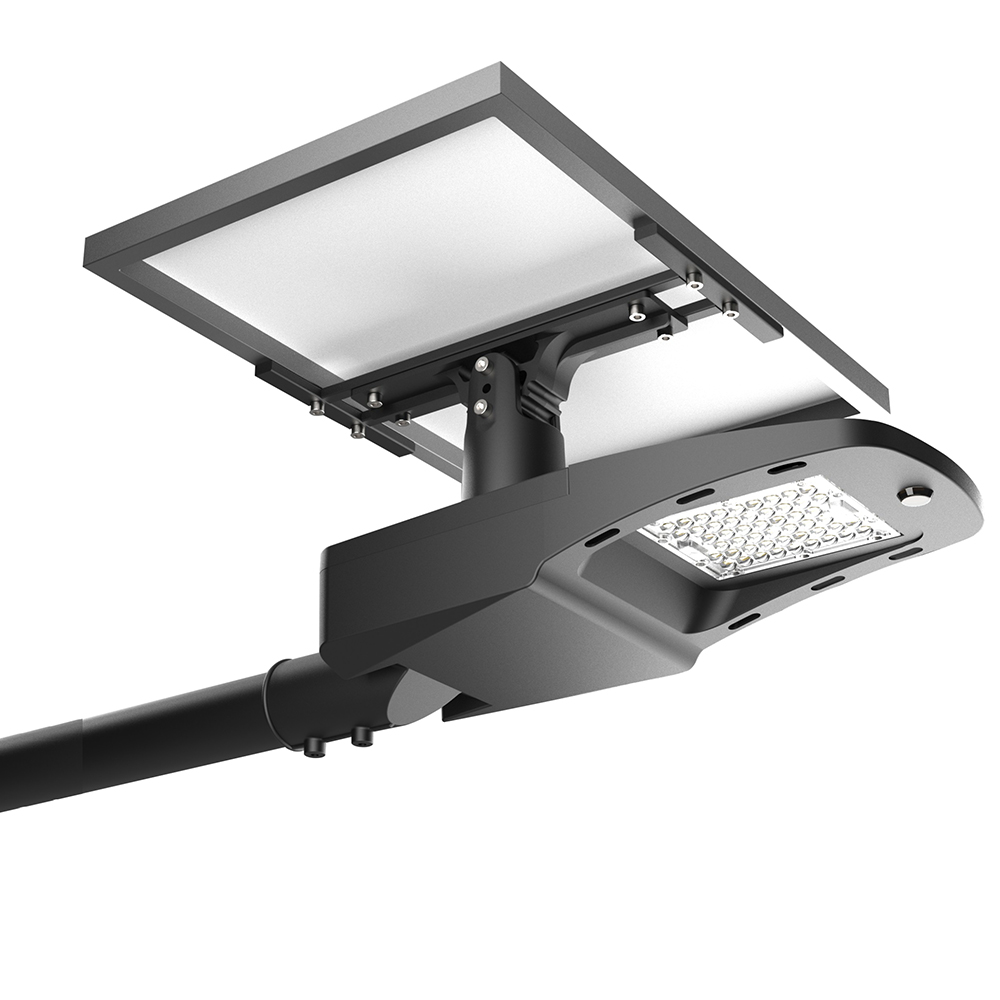
How to Design a Solar Street Light System: A Complete Guide for Engineers, Contractors, and Project Developers
Solar street lights have become an increasingly popular lighting solution for roads, highways, parks, residential communities, industrial facilities, and smart city projects. Compared with traditional grid-powered lighting, solar street lighting systems offer lower operating costs, easier installation, energy independence, and reduced carbon emissions.
However, designing a reliable solar street light system requires more than simply selecting a solar panel and battery. Proper system design must consider local solar radiation, lighting requirements, battery autonomy, LED efficiency, environmental conditions, and long-term performance.
This guide explains the key principles and calculations used in professional solar street light design.
What Is a Solar Street Light System?
A solar street light system converts sunlight into electrical energy during the day and stores it in a battery for nighttime illumination.
A typical system consists of:
- Solar Panel
- LiFePO4 Battery
- LED Luminaire
- Solar Charge Controller (MPPT or PWM)
- Lighting Pole
- Mounting Brackets
- Smart Control System (Optional)
The performance of the entire system depends on balancing energy generation, energy storage, and energy consumption.
Step 1: Determine Lighting Requirements
The first step is understanding the lighting requirements of the project.
Important factors include:
Road Classification
Different applications require different lighting levels:
- Residential Roads
- Community Roads
- Parking Areas
- Pedestrian Walkways
- Parks
- Highways
- Industrial Zones
Pole Height
Typical pole heights include:
| Application | Pole Height |
|---|---|
| Walkway | 3-5m |
| Residential Road | 5-7m |
| Parking Area | 6-8m |
| Main Road | 8-10m |
| Highway | 10-12m |
Required Illumination
The required illumination level is usually measured in lux and determined according to local lighting standards.
Step 2: Calculate Daily Energy Consumption
The total daily energy consumption is determined by the LED power and operating hours.
Formula:
Daily Energy Consumption (Wh) = LED Power (W) × Operating Hours
Example
LED Power: 40W
Operating Time: 12 hours
Daily Energy Consumption: 40 × 12 = 480Wh/day
This means the solar panel and battery system must provide at least 480Wh of usable energy every day.
Step 3: Determine Battery Autonomy Days
Autonomy refers to how many consecutive cloudy or rainy days the system can operate without receiving adequate solar charging.
| Region | Recommended Autonomy |
|---|---|
| Southeast Asia | 2-3 Days |
| Europe | 3-5 Days |
| Northern Europe | 5-7 Days |
| Middle East | 2-3 Days |
| North America | 3-5 Days |
For most municipal projects, 3-5 days of autonomy is considered standard.
Step 4: Select the Battery Capacity
The battery must store enough energy to power the light during nighttime and during periods of poor weather.
Factors to consider:
- Daily Energy Consumption
- System Voltage
- Battery Depth of Discharge (DOD)
- Autonomy Days
LiFePO4 batteries are the most recommended solution for solar street lights due to long cycle life, high safety, excellent temperature performance, and maintenance-free operation.
Step 5: Calculate Solar Panel Size
The solar panel must generate enough energy to power the light, recharge the battery, and compensate for system losses.
Peak Sun Hours (PSH) and system efficiency (70%-80%) are the two most important parameters for accurate sizing.
Step 6: Choose the Right Solar Charge Controller
The controller manages battery charging and protects the system from overcharging and over-discharging.
MPPT controllers are highly recommended for professional solar street lighting projects due to higher efficiency and better low-light performance.
Step 7: Optimize LED Lighting Efficiency
High-efficiency LEDs (160 to 200+ lm/W) allow smaller batteries and solar panels, reducing overall project cost while maintaining brightness and uniformity.
Step 8: Consider Environmental Conditions
A reliable solar street light design must account for temperature, wind load, corrosion, dust, and snow. These factors directly affect long-term performance and service life.
Step 9: Smart Control Features
Modern solar street lights support motion sensors, adaptive dimming, time scheduling, remote monitoring, and smart city integration to save energy and extend battery life.
Common Solar Street Light Design Mistakes
- Undersized batteries
- Insufficient solar panel capacity
- Ignoring local weather and sun hours
- Low-efficiency LEDs
- Low-quality charge controllers
- Over-focus on wattage instead of energy balance
Why Custom Solar Street Light Design Matters
Every project has unique requirements based on location, climate, lighting standards, environment, budget, and operating schedule. Customized solutions deliver better reliability and lower lifecycle costs.
At FORLEAVES, we provide full system design services including solar panel selection, battery configuration, MPPT controller integration, pole design, smart controls, and OEM & ODM development.
Conclusion
Designing a solar street light system requires balanced calculation of energy generation, storage, and consumption. Properly sized components ensure stable performance, low maintenance, and long-term energy savings for roads, parks, industrial areas, and smart cities.
Related Products
50W solar street light | 60W all-in-one solar street light
Contact Us
Contact us at info@forleaves.com for professional solar street light system design and customized solutions for your projects.
