



Jun 06, 2026
MPPT vs PWM for Solar Street Lights: Which Controller Should You Choose?
Introduction
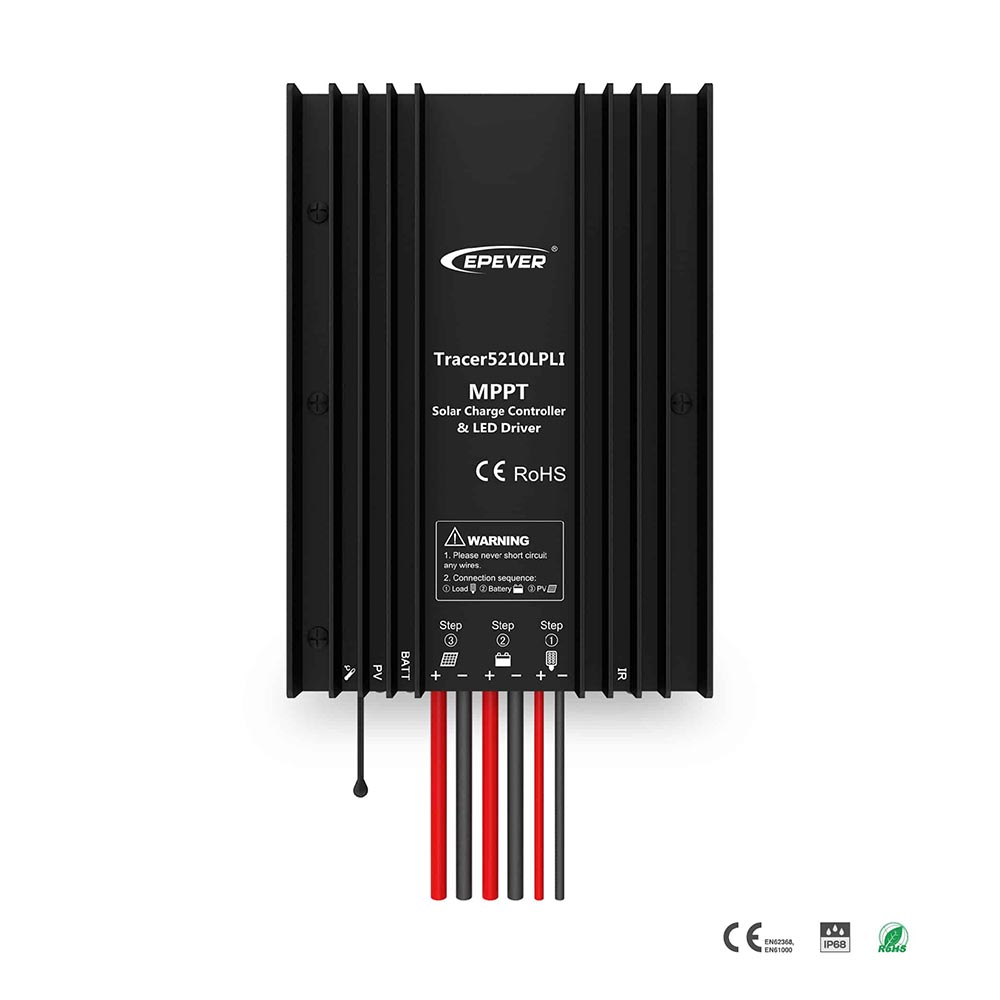
The charge controller is the “brain” of a solar street light system. It regulates charging, protects the battery, manages discharge, and often controls lighting schedules and dimming.
When specifying a solar street light project, one of the most important decisions is choosing between:
- MPPT (Maximum Power Point Tracking) Controller
- PWM (Pulse Width Modulation) Controller
Both can work in solar lighting systems, but they differ significantly in efficiency, battery charging performance, and long-term reliability.
This guide explains the technical differences and helps engineers, EPC contractors, municipalities, and project developers select the right controller for solar street lights.
What Does a Solar Street Light Controller Do?
A controller performs several critical functions:
- Regulates battery charging
- Prevents overcharge and over-discharge
- Protects against reverse current
- Manages lighting schedules
- Controls dimming and load output
- Monitors battery status and system faults
Because the controller sits between the solar panel, battery, and LED load, its efficiency directly affects system performance.
How PWM Controllers Work
PWM controllers connect the solar panel to the battery through rapid switching pulses. The panel voltage is effectively pulled close to the battery voltage during charging.
Advantages of PWM
- Lower initial cost
- Simple and proven technology
- Suitable for very small systems in stable climates
Disadvantages of PWM
- Lower charging efficiency
- Cannot harvest maximum panel power
- Reduced performance in cold weather and low-light conditions
- Less effective when panel voltage is significantly higher than battery voltage
How MPPT Controllers Work
MPPT controllers continuously track the solar panel’s maximum power point and convert excess voltage into additional charging current.
Advantages of MPPT
- Higher energy harvest from the same solar panel
- Better charging during winter, cloudy weather, and low irradiance
- Faster battery charging
- More flexible panel-to-battery voltage ratios
- Improved overall system reliability in demanding projects
Disadvantages of MPPT
- Higher initial cost
- More complex electronics
- Slightly higher standby power consumption in some designs
MPPT vs PWM: Efficiency Comparison
| Feature | PWM | MPPT |
|---|---|---|
| Typical Charging Efficiency | ~70-85% | ~95-99% |
| Energy Harvest in Weak Sunlight | Lower | Higher |
| Winter Performance | Moderate | Better |
| Recovery After Cloudy Days | Slower | Faster |
| Panel Voltage Flexibility | Limited | High |
| Initial Cost | Lower | Higher |
In practical solar street lighting projects, MPPT controllers often deliver noticeably better annual energy yield, especially in regions with variable weather or lower winter solar irradiance.
Why MPPT Matters for Solar Street Lights
Solar street lights are typically designed with limited panel area and battery capacity. Any improvement in charging efficiency directly increases system reliability.
Consider a 160Wp panel charging a 12V battery:
- A PWM controller may effectively waste part of the panel’s voltage potential.
- An MPPT controller converts that excess voltage into additional charging current.
Over months of operation, the MPPT system can accumulate substantially more usable energy, which is particularly valuable during cloudy seasons and winter months.
Impact on Battery Life
Battery longevity depends heavily on charging quality.
MPPT controllers generally provide:
- More complete charging cycles
- Better voltage regulation
- Reduced chronic undercharging
- Improved state-of-charge management
This is especially important for LiFePO4 batteries, where proper charge profiles help maximize cycle life and performance.
When PWM Can Still Be Acceptable
PWM is not obsolete. It can be appropriate when:
- System power is very small (e.g., 10-20W pathway lights)
- Local solar irradiation is consistently high year-round
- Budget is extremely constrained
- Maintenance access is easy
- Performance requirements are non-critical
For municipal roads, commercial projects, and professional installations, PWM is increasingly uncommon.
Controller Selection by Project Type
| Project Type | Recommended Controller |
|---|---|
| Small Garden/Pathway Light | PWM or MPPT |
| Residential Street Light | MPPT Preferred |
| Municipal Road Project | MPPT Recommended |
| Industrial/Commercial Site | MPPT Recommended |
| Highway Lighting | MPPT Essential |
| Cold-Climate Installation | MPPT Strongly Recommended |
| Remote Maintenance-Difficult Site | MPPT Strongly Recommended |
Common Specification Mistakes
1. Comparing Controllers Only by Current Rating
A “20A PWM” is not equivalent to a “20A MPPT” in real-world energy harvest.
2. Ignoring Panel Voltage Compatibility
MPPT controllers support wider PV voltage ranges and more flexible system design.
3. Focusing Only on Upfront Cost
For solar street lights, reduced battery failures and improved uptime often justify the higher MPPT cost.
4. Using PWM with Oversized High-Voltage Panels
Much of the available panel power may be lost if the controller cannot convert voltage efficiently.
Design Recommendation from FORLEAVES
For professional solar street lighting projects, FORLEAVES generally recommends MPPT controllers paired with LiFePO4 batteries because this combination provides:
- Higher charging efficiency
- Better low-light performance
- Faster recovery after cloudy periods
- Longer battery life
- Lower maintenance frequency
- Improved year-round reliability
PWM controllers may still be used for small, cost-sensitive applications where performance margins are less critical.
Conclusion
The choice between MPPT and PWM is fundamentally a trade-off between initial cost and lifetime performance.
For most modern solar street light projects—especially municipal, commercial, industrial, remote, or cold-climate installations—MPPT controllers are the preferred engineering choice due to their superior energy harvest, battery charging quality, and system reliability.
When specifying a project, evaluate the controller as part of the entire energy system rather than as an isolated component. A well-matched solar panel, MPPT controller, LiFePO4 battery, and LED luminaire will usually deliver the lowest lifecycle cost and the most reliable lighting performance.
Related Reading
How to Design a Solar Street Light System | Solar Street Light Battery Sizing Guide | LiFePO4 Battery Selection Guide
FORLEAVES provides project-specific engineering support, including solar panel sizing, MPPT controller selection, LiFePO4 battery configuration, and OEM/ODM solar street light development.
Tags:Custom Solar Panel, Glass Solar Panel, Ring Solar Panel, Irregular Shape Solar Panel, Flexible Solar Panel, Solar Panel for IoT, Smart Lighting Solar Panel, Vehicle Solar Panel, BIPV Module, LiFePO4 Battery
